


Ultrasonic Cavitation in Bromley: What It Is, Who It Suits and Realistic Results
In over 8 years of treating clients here in Hayes, Bromley, I’ve noticed a clear pattern in who gets the best results from ultrasonic cavitation. It isn’t the people hoping a machine will do the work for them. It’s the people who already eat well and move regularly, but have one or two areas that simply won’t shift: the lower tummy, the flanks, the inner thighs.
For them, cavitation can be the extra push that finally reshapes those areas. This guide explains how it works, who it suits, and exactly how to get the best possible results from your course.
How it works: what’s happening under your skin
Every session at Laura’s Touch combines three treatments. Here’s what each one does, and why they work best together.
Ultrasonic cavitation
When I glide the cavitation probe over your skin, it sends low-frequency ultrasound waves into the layer of fat just beneath. These waves create tiny bubbles in the fluid around your fat cells. As the bubbles expand and collapse, they put pressure on the walls of the fat cells, which is designed to break them down. That process is called cavitation, which is where the treatment gets its name.
When a fat cell’s wall is disrupted, the fat stored inside it (triglycerides) is released into the fluid between your cells. Your lymphatic system and bloodstream then carry it to your liver, which processes it in the same way as fat from your food: it’s broken down and either used for energy or removed from the body as waste.
It’s non-invasive: no needles, no anaesthetic and no downtime. Most clients go straight back to work or the school run afterwards.
Radiofrequency (RF)
Next, I treat the same area with radiofrequency. RF uses gentle energy to warm the deeper layers of your skin. That warmth encourages your skin to produce new collagen and elastin, the proteins that keep skin firm and smooth.
Collagen builds gradually, so your skin keeps improving for weeks after each session. As the area underneath reshapes, RF helps the skin look firmer and smoother, and it’s one of the most researched non-surgical options for improving the appearance of cellulite. It also feels like a warm, relaxing massage.
Manual lymphatic drainage or pressotherapy
Your lymphatic system is a network of vessels that clears fluid and waste from your tissues. Unlike your blood, it has no pump of its own. It relies on movement, breathing and your muscles to keep it flowing.
After cavitation, this is the system your body uses to carry the released fat away from the treated area. So I finish every session with one of these:
- Manual lymphatic drainage (MLD): slow, gentle, rhythmic strokes by hand that encourage lymph to flow towards your lymph nodes.
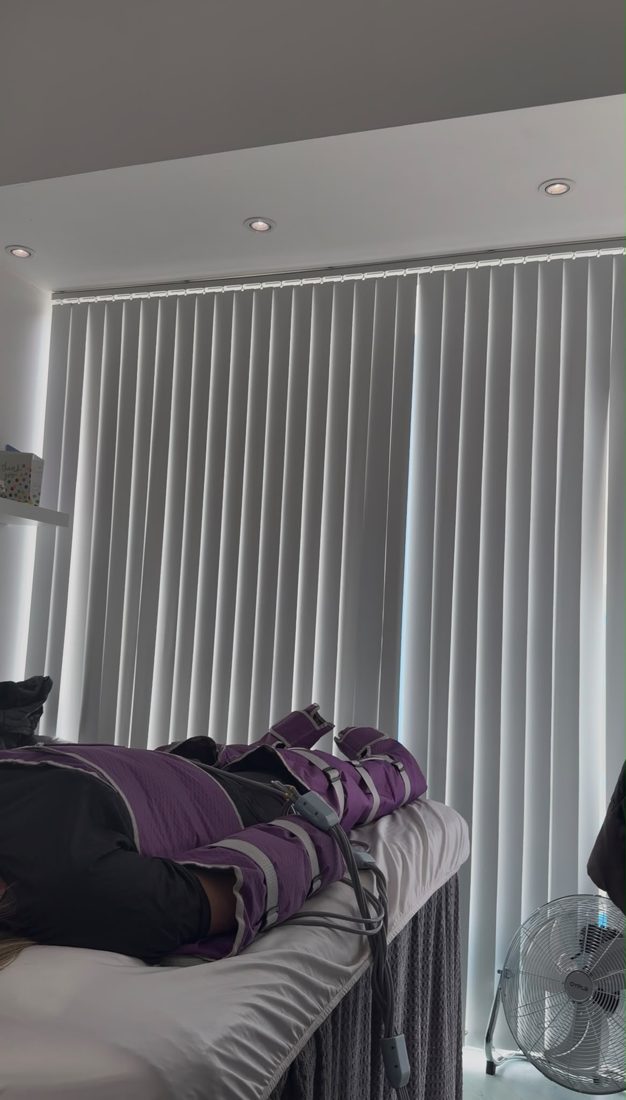
- Pressotherapy: a special suit with air chambers that inflate and deflate in sequence, from your feet upwards, gently compressing your legs, stomach and arms.
Both are designed to support your lymphatic system while it’s working, ease fluid retention and puffiness, and leave you feeling lighter.
Why I offer it as a package, not separately
Each part of the treatment has a different job:
- Cavitation targets the stubborn fat.
- Radiofrequency works on the skin, so it looks firmer and smoother as the area reshapes.
- MLD or pressotherapy supports the lymphatic system that carries away what’s been released.
Having just one of these would only do part of the job. That’s why I only offer cavitation as a complete package. A typical session is 60 minutes of cavitation and RF followed by 30 minutes of MLD, or 90 minutes of cavitation and RF combined with pressotherapy.
Who it’s for, and who it isn’t
Cavitation is a contouring treatment, not a weight-loss treatment. It’s designed for stubborn pockets of fat in specific areas, such as the stomach, flanks, thighs and arms.
You’re likely to be a good candidate if you:
- Are within roughly 10–15% of your ideal body weight, but have one or two areas that don’t respond to diet and exercise
- Already have a regular exercise routine and a healthy, balanced diet
- Want a smoother shape and firmer-looking skin, perhaps ahead of a wedding, holiday or special event
- Are happy to commit to a course and follow the aftercare
Cavitation isn’t suitable for everyone. It’s not the right treatment if you:
- Want to lose weight overall or drop several dress sizes
- Are hoping it will replace exercise or healthy eating
- Are pregnant or breastfeeding (I ask clients to wait 6 months after giving birth, or 12 months after a C-section)
- Have less than 2cm of pinchable fat in the area
- Have an infection or inflammation in the area to be treated
- Have a pacemaker, or any metal implants in the area you’d like treated
- Have a history of cancer
- Have a blood clotting disorder or take medication that affects clotting
- Have diabetes, osteoporosis, heart disease, or liver or kidney problems
Before your first session, I ask every client to complete a health questionnaire. At your consultation, we then go through your health history, your current exercise and eating habits, and exactly what you want to achieve. If cavitation isn’t right for you, I’ll tell you, and suggest what might suit you better.
If you’ve recently had cosmetic surgery, you’ll need to wait at least 3 weeks and bring written approval from your surgeon before starting any body contouring treatment with me.
What results are realistic, and how many sessions?
The clients who get the best results all have one thing in common: they pair their treatment with healthy eating and regular exercise, and they follow the aftercare after every session.
How many sessions will I need?
For a noticeable change, I recommend a course of 6 to 10 sessions or more, in line with what’s widely recommended for cavitation. The exact number depends on the area being treated and how much stubborn fat there is. I also offer a 4-session package, but that’s only for clients with a small amount of fat to refine.
How often should I book?
Sessions need to be at least 3 days (72 hours) apart. That gives your body time to process what was released in your last session before the next one. Booking closer together won’t speed things up.
For the best results, plan for 1 to 2 sessions a week, with at least 3 days in between. Before you book a course, check your diary and make sure you can commit to coming in every week until it’s complete. Long gaps between sessions slow your progress.
When will I see results?
Your body needs time to process the released fat, so results build gradually:
- First 2 to 3 weeks: many clients notice their clothes fitting differently and feel less bloated, helped by the lymphatic drainage.
- Around 6 to 12 weeks: this is when results are usually most visible, as your body continues to process the treated fat and RF continues to build collagen. Your results can keep improving for a few weeks after your final session.
Individual results vary. Clients who follow a healthy eating and exercise routine throughout their course usually see results sooner, which is why aftercare is so important.
What you can realistically hope for:
- A smoother, more defined shape in the treated area
- Skin that looks and feels smoother
- An improvement in how cellulite looks (more on that below)
Getting the most from your course. Cavitation works best alongside a healthy lifestyle, not instead of one. It isn’t a weight-loss treatment, and your results can be reduced if you:
- Skip the aftercare, especially the cardio, water and avoiding alcohol
- Don’t keep to a balanced, healthy diet during and after your course
- Stop exercising, or let your weight creep up once your course is finished
Can it help with cellulite?
Cellulite is one of the things clients ask me about most, and it’s completely normal: research suggests it affects up to 80% of women after puberty. It isn’t just fat. It’s caused by the way bands of connective tissue under the skin pull down while fat pushes up, which is why even slim, fit women have it.
No treatment can make cellulite disappear completely, but the right combination can make a real difference to how it looks:
- Radiofrequency has the most research behind it for cellulite, and is the part of your treatment most focused on the skin’s texture.
- Cavitation works on the fat layer underneath.
- MLD or pressotherapy can ease fluid retention, and puffiness often makes cellulite look more noticeable.
For a visible improvement in cellulite, I usually recommend 6 to 10 sessions. What you do between sessions matters just as much:
- Strength training, especially for the legs and glutes, builds firmer muscle under the skin
- Regular cardio and a balanced diet help reduce overall body fat, which makes cellulite less visible
- Keeping to a stable weight stops the area from changing shape again
Stubborn tummy fat during menopause
Many of my clients are women going through perimenopause or menopause who tell me the same thing: they’re eating well and exercising, but fat has started to settle around their stomach and won’t shift. They’re not imagining it. Research shows that as oestrogen falls around menopause, women tend to store more fat around the middle.
Cavitation can’t change your hormones, but combined with good habits it can be a real help for a stubborn area like the lower tummy. Alongside your sessions, I’d recommend:
- Strength training two or three times a week, to protect muscle
- A balanced diet with enough protein
- Good sleep and managing stress where you can
If menopause symptoms are affecting your weight, energy or sleep, it’s worth talking to your GP too.
What a session feels like
Most clients find cavitation comfortable. You’ll feel warmth and a mild vibration, and you may hear a high-pitched ringing in your ears while the handpiece is working, which stops as soon as it’s lifted away. The RF part feels like a warm stone massage, and many clients find it relaxing.
Afterwards, the treated skin may look a little pink and feel warm for a while. This usually settles within a few hours.
Cavitation is only used on the body, never on the face. For the jawline and cheeks, I use radiofrequency on its own.
How to prepare for your session
- Avoid heavy meals or fatty foods for at least 1 hour before
- Avoid caffeine for 2 hours before
- Avoid alcohol for 24 hours before
- No laser treatments on the area for 2 weeks before
- If the skin is red, irritated or broken, we’ll wait until it has fully healed
Aftercare: where your results are made
What you do after each session matters as much as the treatment itself. Following these steps consistently gives you the best chance of great results, and skipping them can hold your results back.
- Do at least 30 minutes of cardio within an hour of your session. Running, cycling or the treadmill get your circulation and lymphatic system moving and help your body use the released fat as fuel.
- Drink 1–2 litres of water a day to keep your body hydrated while it processes each treatment.
- Keep your diet balanced and healthy, with fewer refined sugars, refined carbs and fatty foods, so your body uses the released fat for energy rather than storing more.
- Avoid alcohol for at least 72 hours. Your liver processes alcohol first, which slows down how it handles the released fat.
- Apply SPF 30 daily to the treated area.
- Don’t wax the area for 3–5 days, exfoliate it for 2–3 days, or have laser treatment on it for 2 weeks.
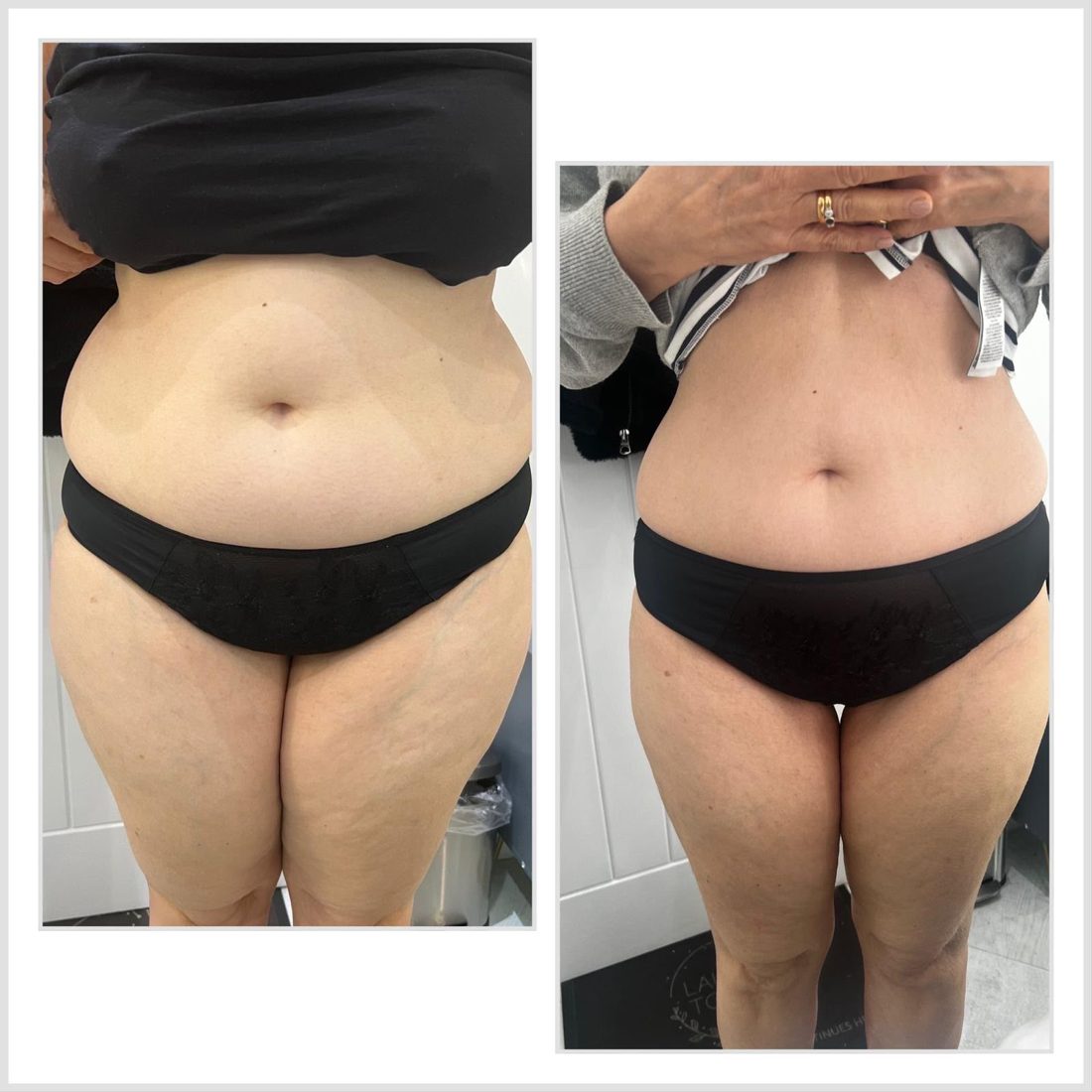
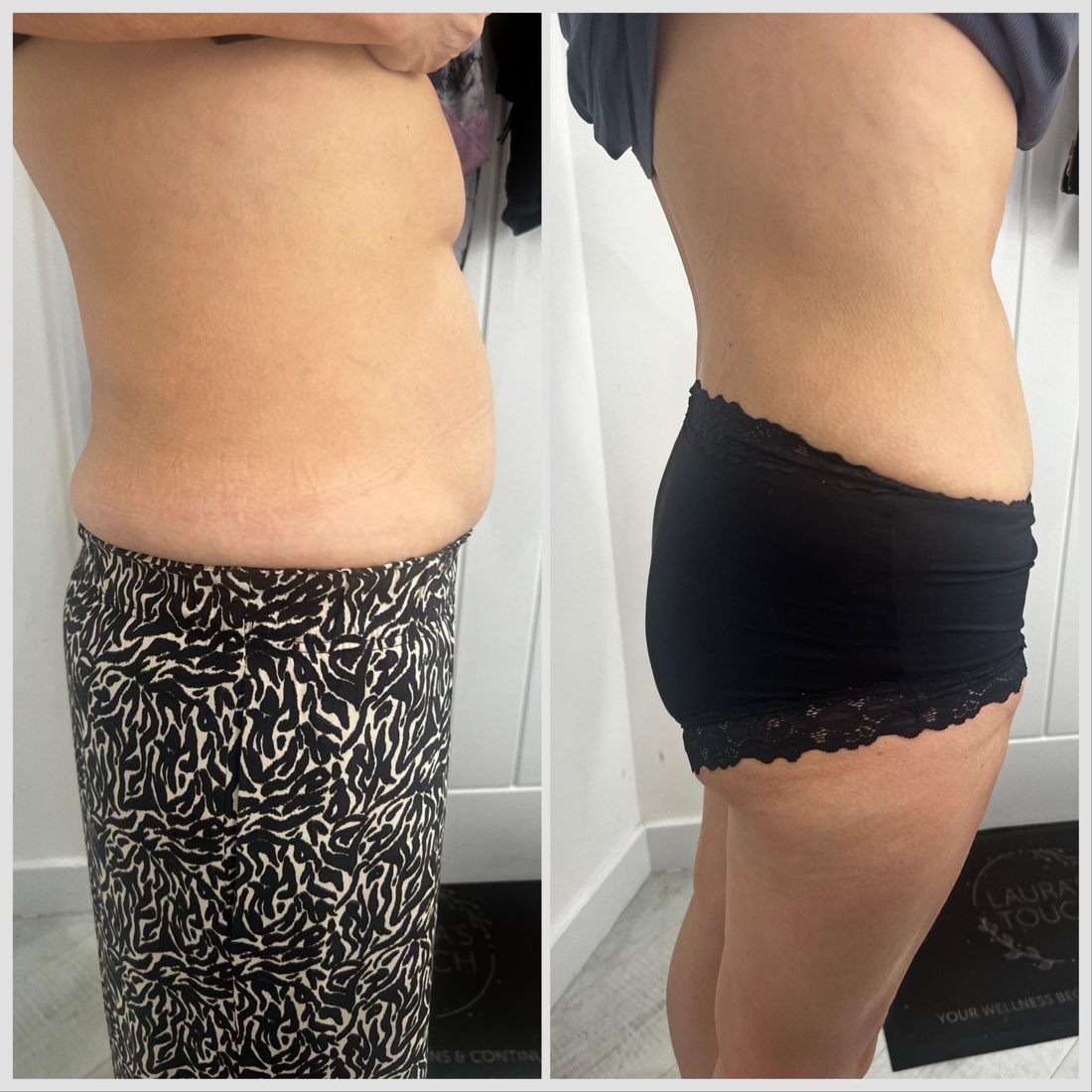
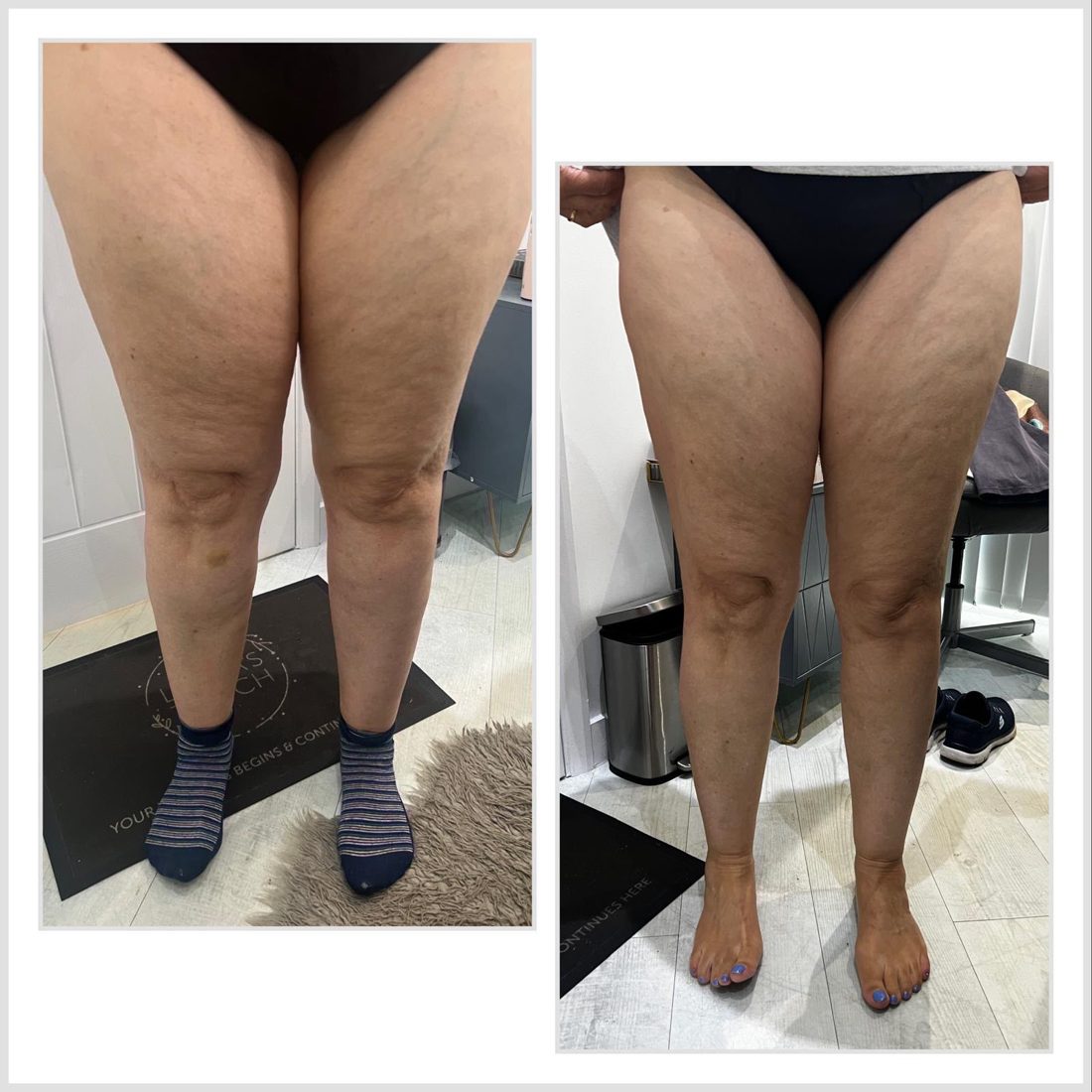
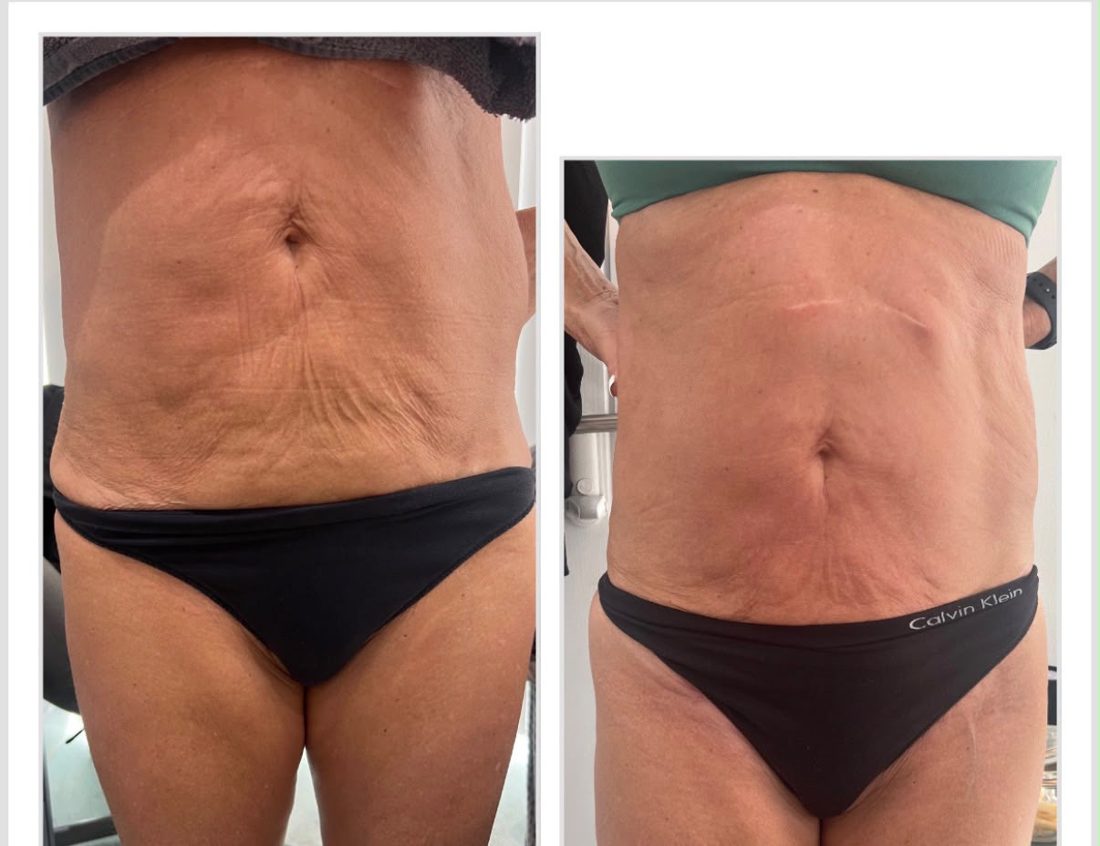
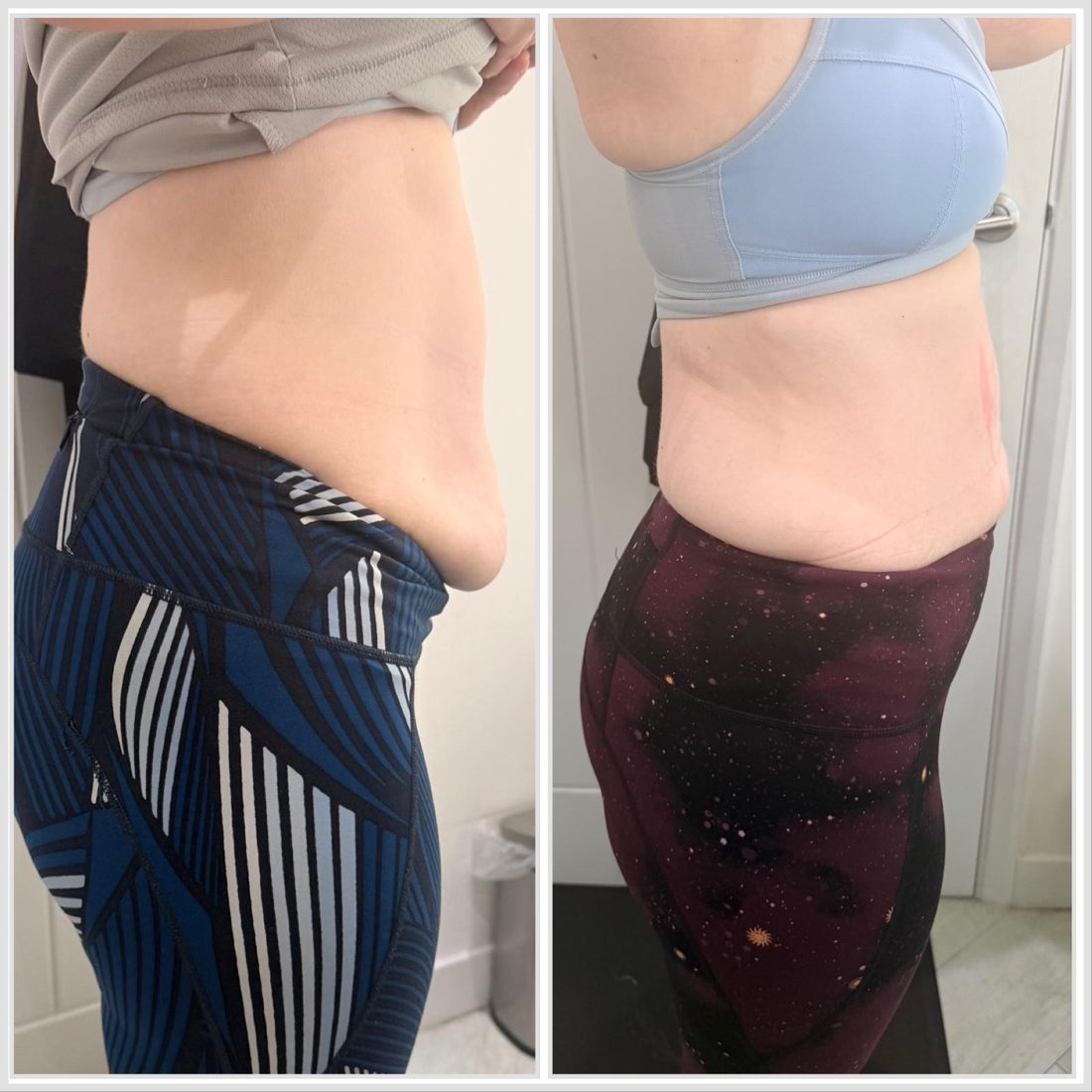
The clients who follow this consistently are the ones whose results you see below.
Real clients from my clinic
Every client comes to me with different goals. Here are some of their results, unedited and shared with their permission. Individual results vary.
Frequently asked questions
Does ultrasonic cavitation hurt?
Most clients find it comfortable. You’ll feel warmth and hear a ringing sound while the handpiece is working, and the RF and lymphatic drainage part is very relaxing.
How many sessions will I need?
I recommend a course of 6 to 10 sessions or more, 1 to 2 a week, with at least 3 days in between. A 4-session package is available for clients with only a small amount of fat to refine.
When will I see results?
Many clients notice a difference in how their clothes fit within the first few weeks. Results are usually most visible around 6 to 12 weeks, and often sooner for clients who follow the aftercare, eat well and exercise regularly.
Will I lose weight?
No. Cavitation isn’t a weight-loss treatment. It’s designed for stubborn areas when you’re already close to a weight you’re happy with.
How long do results last?
Results last best when you keep your weight stable with a healthy diet and regular exercise. That’s why aftercare is built into every course.
Can it get rid of cellulite?
No treatment removes cellulite completely, but the combination of RF, cavitation and lymphatic drainage can improve how it looks, especially alongside strength training and a healthy diet.
I’m going through menopause and struggling with tummy fat. Can it help?
If you already have healthy habits in place, it can be a helpful extra step for a stubborn area. It can’t change the hormonal shift itself, so strength training, diet and sleep still matter most.
Is it an alternative to liposuction?
No. Liposuction is surgery. Cavitation is a gentle, non-invasive way to refine stubborn areas, with no needles and no downtime.
Can cavitation be used on the face?
No, cavitation is only used on the body. For the jawline and cheeks, I use radiofrequency on its own.
I’ve had liposuction. Can I have cavitation?
You’ll need to wait at least 3 weeks after surgery and bring written approval from your surgeon. For post-op clients, I may include cavitation and RF in their recovery plan once it’s safe. Find out more on my post-op lymphatic drainage page.
Can I spread the cost?
Yes. You can pay with Clearpay, Klarna or PayPal at checkout.
Find out if cavitation is right for you
Every course starts with a health questionnaire and a consultation, so we can agree realistic goals before you commit.
Ready to start, or want to compare the block-booking packages? Book your cavitation & RF consultation, or browse the full course prices.
You can also see prices and packages on my non-surgical body contouring page, book online, or email laura@lqtouch.co.uk with any questions. To learn more about the lymphatic part of your treatment, read about manual lymphatic drainage and pressotherapy.


Sorry, the comment form is closed at this time.